
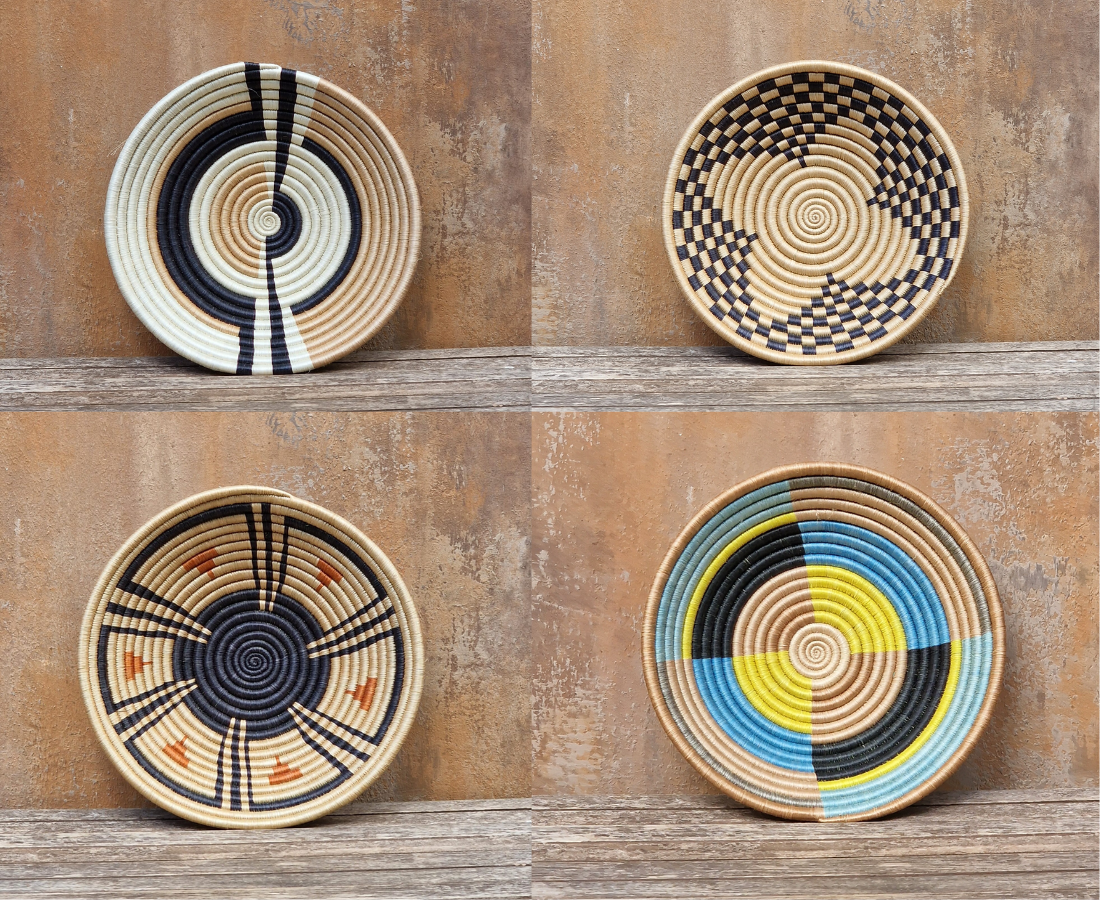
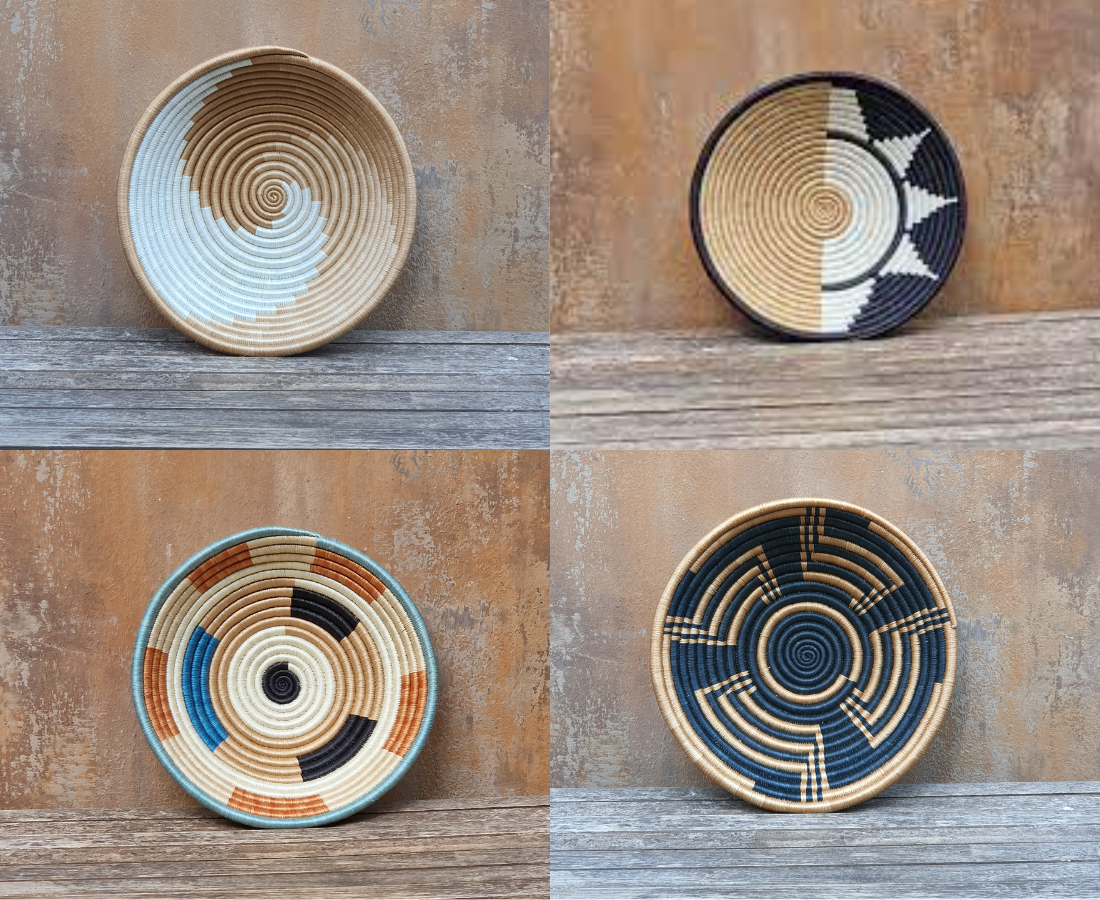
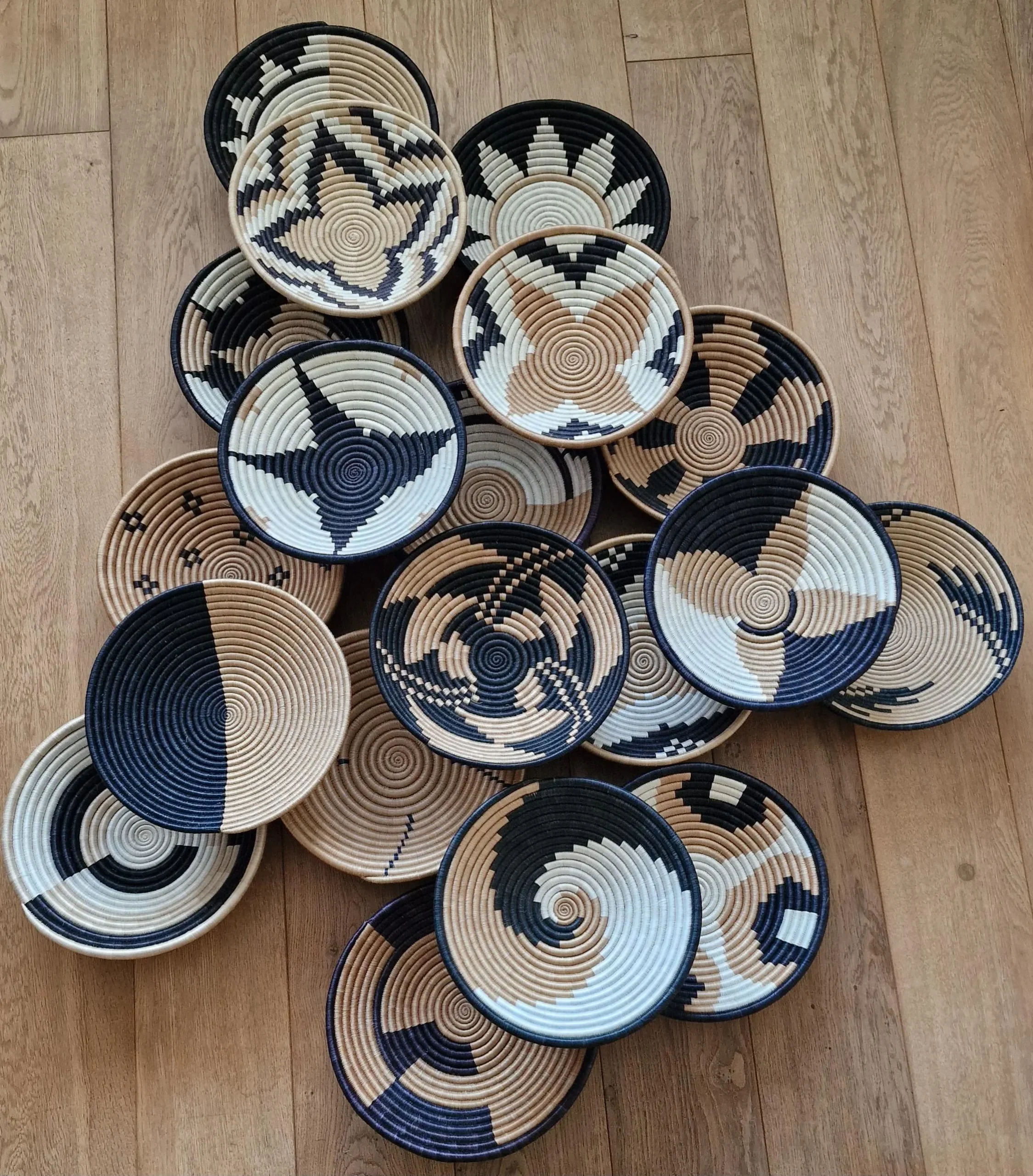
A Rwandese Sisal Basket Bowl is a traditional Rwandan handicraft made by coiling native grasses and wrapping them with hand-dyed sisal fibres. These decorative and functional items are handcrafted by women artisans, often passed down through generations, and are used for home décor, as serving bowls, or for gift-giving.
Handwoven from smooth sisal fibres wrapped around native grasses and reeds, the Rwandese Sisal Basket Bowls are colourful, intricate, and full of life. They are often used to present gifts and represent a unified community, making them a symbol of love, generosity, and the enduring spirit of the Rwandan people.
Key Characteristics:
- Materials: The core is made from native grasses, wrapped in sisal fibers, which are dyed with modern colors.
- Technique: They are created using a difficult coil-weaving technique that requires years of practice.
- Cultural significance: These baskets are symbols of peace, unity, reconciliation, and hope in Rwandan culture. They are often given as gifts, symbolizing generosity and love.
Eventually, there are three basic kinds of baskets: coiled, twined, or woven. On the one hand, a woven basket is made of spokes and weavers: the spokes run up and down, and the weavers go over and under the spokes. On the other hand, a coiled basket is made by sewing rings of a fibrous material to the previous ring.
Technically, the Agaseke Basket, a symbol of peace and unity in Rwandan culture, woven using the technique Inyanja, has played a vital role in fostering reconciliation since the 1994 Genocide against the Tutsi, while also providing a source of income for many.
Topmost Uses:
- As a serving or fruit bowl
- For home organization
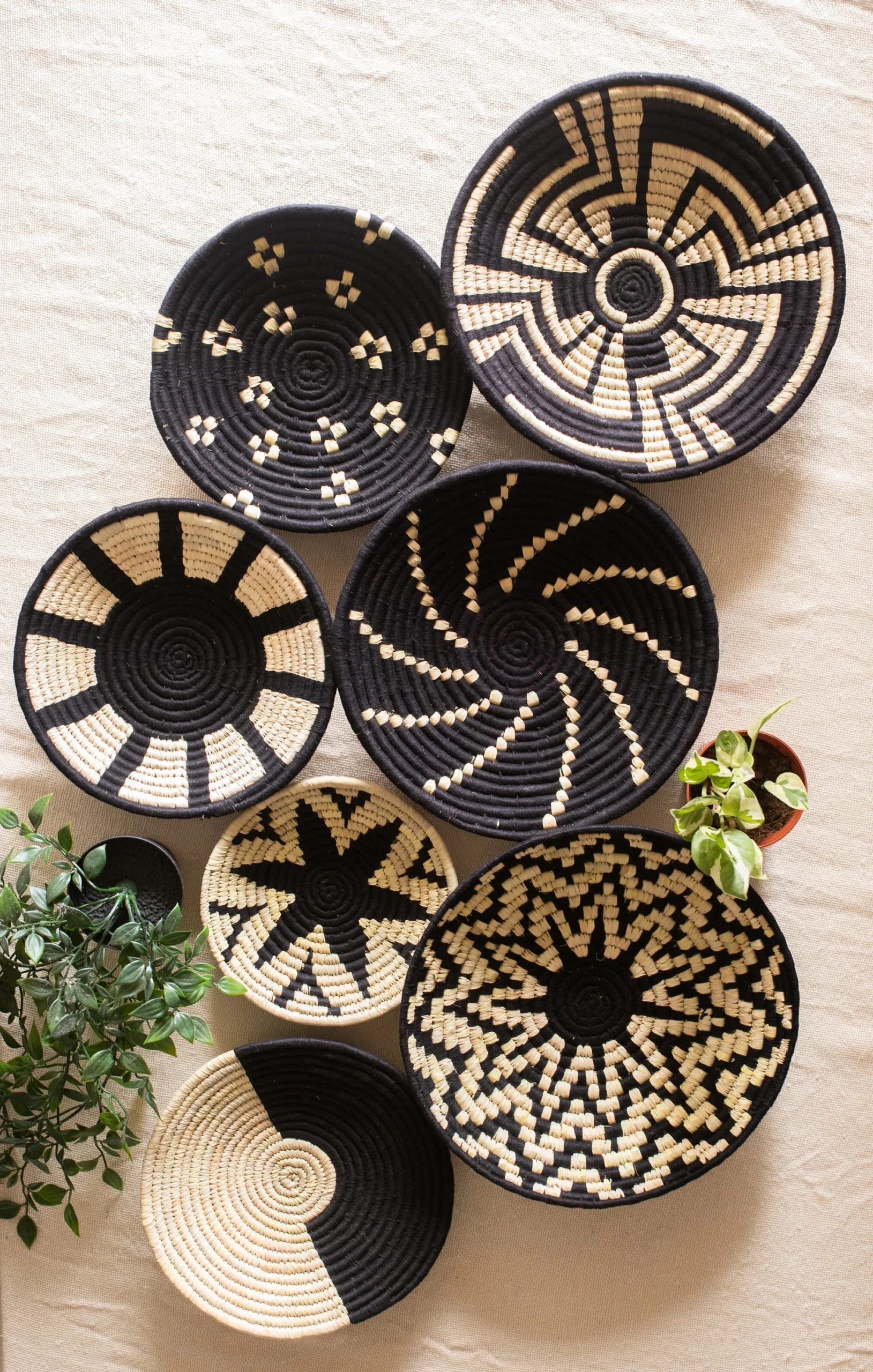
- As wall decor, sometimes hung as a collection
- Traditionally, they were used for winnowing grain.
In terms of artisan support, purchasing these baskets provides a source of income for women weavers in Rwanda, helping to improve their living conditions and communities.



Reviews
There are no reviews yet.